Bücher Kostenlos Story: Style, Structure, Substance, and the Principles of Screenwriting, by Robert McKee
Finden Sie die Story: Style, Structure, Substance, And The Principles Of Screenwriting, By Robert McKee in dieser Internet-Seite basiert auf dem Web-Link, die wir angeboten haben. Natürlich wird es in Soft-Daten bleiben, aber auf diese Weise können Sie reduzieren, um diese Publikation zu erhalten und zu nutzen. Dieses faszinierende Buch ist bereits besorgt auf die Art der einfachen Buch schreibt mit Thema ansprechend zu überprüfen. Außerdem genau, wie sie die Abdeckung machen, ist extrem clever. Es bereitet Konzept zu sehen, wie dieses Buch in dem Besucher bringt. Es wird sicherlich ebenfalls genau sehen, wie die Zuschauer werden sicherlich diese Publikation wählen zu gehen zusammen mit während der Freizeit. Lassen Sie uns untersuchen und auch nur eine der Personen, die diese Publikation erhalten.
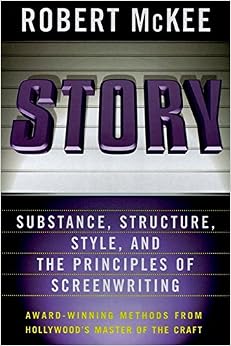
Story: Style, Structure, Substance, and the Principles of Screenwriting, by Robert McKee

Bücher Kostenlos Story: Style, Structure, Substance, and the Principles of Screenwriting, by Robert McKee
für die lange Zeit nach einer Wartezeit, jetzt endlich kommt es. Eine Publikation, die eine von einem des wartete Artikel in dieser Ära wird! Das Buch, das rund um den Globus sicher verbreiten! Sicherlich ist dieses Buch ein, das wir für Sie vorschlagen. Die beste als das Beste, was zusätzlich zu finden! Derzeit noch einmal, Guide ist Story: Style, Structure, Substance, And The Principles Of Screenwriting, By Robert McKee
Jede Art von Büchern, die Sie lesen, egal wie man die Sätze bekam, die aus den Büchern gelesen haben, sicherlich werden sie geben Ihnen Güte. Dennoch werden wir sicherlich unter Anregung von Führungs zeigen, die Sie lesen müssen. Das Story: Style, Structure, Substance, And The Principles Of Screenwriting, By Robert McKee ist genau das, was wir mit Sicherheit angeben. Wir werden Ihnen die erschwinglichen Gründe zeigen, warum Sie dieses Buch lesen sollte. Diese Publikation ist eine Art von unschätzbarem Wert Buch von einem erfahrenen Autor zusammen.
Die Story: Style, Structure, Substance, And The Principles Of Screenwriting, By Robert McKee wird ebenfalls säen Sie hervorragende Möglichkeit, Ihr geeignet zu erreichen. Wenn es für Sie zum Leben erweckt wird, können Sie es in Ihrer Freizeit lesen. Warum man es nicht versuchen? Wirklich, Sie werden sicherlich nicht bekannt, wie genau diese Veröffentlichung, es sei denn Sie überprüfen. Obwohl Sie diese Veröffentlichung schnell nicht viel Zeit haben, zu vervollständigen, ist es in der Tat sollte nicht schnell enden. Wählen Sie Ihre wertvolle Freizeit zu nutzen, um diese Publikation zu lesen.
Amazon.de
Writing for the screen is quirky business. A writer must labor meticulously over his or her prose, yet very little of that prose is ever heard by filmgoers. The few words that do reach the audience, in the form of the characters' dialogue, are, according to Robert McKee, best left to last in the writing process. ("As Alfred Hitchcock once remarked, 'When the screenplay has been written and the dialogue has been added, we're ready to shoot.' ") In Story, McKee puts into book form what he has been teaching screenwriters for years in his seminar on story structure, which is considered by many to be a prerequisite to the film biz. (The long list of film and television projects that McKee's students have written, directed, or produced includes Air Force One, The Deer Hunter, E.R., A Fish Called Wanda, Forrest Gump, NYPD Blue, and Sleepless in Seattle.) Legions of writers flock to Hollywood in search of easy money, calculating the best way to get rich quick. This book is not for them. McKee is passionate about the art of screenwriting. "No one needs yet another recipe book on how to reheat Hollywood leftovers," he writes. "We need a rediscovery of the underlying tenets of our art, the guiding principles that liberate talent." Story is a true path to just such a rediscovery. In it, McKee offers so much sound advice, drawing from sources as wide ranging as Aristotle and Casablanca, Stanislavski and Chinatown, that it is impossible not to come away feeling immeasurably better equipped to write a screenplay and infinitely more inspired to write a brilliant one.--Jane Steinberg
Pressestimmen
..". stimulating, innovative, refreshingly practical."-- Lawrence Kasdan, Director"McKee is the Stanislavski of writing."-- Dennis Dugan, Writer, NYPD Blue"In difficult periods of writing, I often turn to Robert McKee's wonderful book for guidance"-- Dominick Dunne, Novelist"to the people who write, direct and produce for Hollywood - or desperately wish they did - Bob McKee is a cross between E. F. Hutton and Sun Myung Moon. The man speaks, and people start to take furious notes - he is now the undisputed screenwriting king... for the legendary screenwriting boot camp that he runs. Thirty-thousand aspiring screenwriters have already taken McKee's 30-hour, three-day course..."-- "Newsday"[Story is]an excellent instruction manual on the craft of storytelling.""Austin American-Statesman..".the best guide on writing you can find."Laurence Chollet, "The Record, Northern New Jersey
Alle Produktbeschreibungen
Produktinformation
Gebundene Ausgabe: 480 Seiten
Verlag: It Books; Auflage: 1 (25. November 1997)
Sprache: Englisch
ISBN-10: 9780060391683
ISBN-13: 978-0060391683
ASIN: 0060391685
Größe und/oder Gewicht:
23,9 x 16,5 x 4,1 cm
Durchschnittliche Kundenbewertung:
4.9 von 5 Sternen
25 Kundenrezensionen
Amazon Bestseller-Rang:
Nr. 6.080 in Fremdsprachige Bücher (Siehe Top 100 in Fremdsprachige Bücher)
This book is by no means perfect - but its still one of the best (maybe THE best) about the topic of "story".WHY IT ISN'T PERFECT:1) The book starts with pages and pages of facts and theory that are quite obvious. You read page after page and say "Yes, he's right, that's true", and it is, but its meaningless. Even if this is the first time in your life you think about "story". But if you continue reading, the pages start bearing more significance. Would have been better with just 200 pages instead of 400.2) Although the book has the word "structure" in its title, the books own structure is horrible, if not completely absent. If you really want to "work" with the book, its probably a good idea to write down the essence of the book in short notes and give them your own structure afterwards.3) McKee is very dogmatic. Obviously he has an incredible (philosophical) knowledge about the topic. Enough to make him a story guru in my opinion. But dogmatic statements are never a good idea. And with some statements I think, he's wrong. But honestly that doesn't really matter, because ...WHY IT'S STILL THE BEST BOOK ABOUT STORY:1) ... Even if McKee might be wrong with some of his claims (in my opinion), the great achievement is, that without McKee pointing out some aspects, I had never given them a single thought. So no matter if you share all of his opinions or not - while reading his book, you start to think about "story" in a new and different way. That's brilliant. And even if you contradict - you almost certainly learned something new and valuable. But the point is: don't just shovel the pages into your brain like a bowl of Kellogg's Frosties. Think, criticize and question everything. Make your own mind! This book teaches you how to walk and stand on your own two feet. But like any good father who teaches you to follow into his footsteps, in order to become a real successor, first the father has to die.2) McKee covers every aspect of "story" there is. If you re-structure the book a bit, it will you provide you with an in-depth "how-to" instruction. And its a great tool to analyze your or other stories.3) The book is mainly about blockbusters. Big Hollywood movies. Its not about "how stories work" but about "how Hollywood movies work". At first this might look like a flaw. Especially if you're bored of the Hollywood story telling style. But actually its not a flaw but a very good thing: You learn how and why these blockbusters work and you learn why and when they bore you. I you want to write an intelligent, individual avantgarde story there is no "how to" instruction anyway (or it would be pointless). You have to do this by yourself. But you have to know and understand the conventions of your craft first. Its like painting. You have to learn to paint photo-realistic before you can successfully do abstract art (have a look at Picasso and van Gogh and their early work). Which means: If you do not want to write a Hollywood blockbuster - read this book and learn what you have to avoid (or to include).
Bin mit dem Buch noch nicht ganz durch (ungefähr die Hälfte), aber ich kann schon mal sagen, dass ich es wirklich interessant und lehrreich finde. Ich habe es mir absichtlich in Englisch gekauft, weil ich ein englisches Drehbuch schreiben möchte und einfach wissen wollte, welche Begriffe in der Filmsprache verwendet werden usw.Und ich wurde nicht enttäuscht!Robert McKee erklärt in einfachen, aber direkten Worten, auf welche (vielen) Dinge man achten muss, um ein gutes Drehbuch zu schreiben.
This audio book has helped me a lot! It's a great way to remind you of important story rules before sleeping (when all great ideas come to you anyway). I own the book as well, and I noticed that in the audio book Robert McKee doesn't read the book word to word. In the audio book he is getting to the point of things faster. I wish amazon sold his flash stick: same audio content although in the form of a flash stick. CDs are becoming an uncomfortable way to do things nowadays believe it or not. I am happy overall though :)
Wer sich für Storytelling in Filmen interessiert und mehr darüber wissen möchte, wie Drehbücher funktionieren, der wird um Robert McKee nur schwerlich herumkommen.Mit seinem Buch Story bricht McKee das Storytelling auf seine einzelteile herunter und beschreibt gut verständlich wie aus deren Zusammenspiel starke Drehbücher werden die das Publikum begeistern. Sehr zu empfehlen!
It's quite technical in its way, occasionally polemical, and the structure is not that clear. It also omits certain approaches you might read elsewhere. Yet this is the most comprehensive how-to book I know for constructing stories, that is for composing step outlines. From story arc to beat, the book tackles the broad overview right down to the smaller units of plot. It is downright de-mystifying in its usefulness for anyone creating stories, be it for page, stage, or screen. Highly recommended.
While the book is aimed first and foremost on the screenwriters it may be really useful for people writing for the general public - LJ users, comic writers, and possibly even laymen storytellers.
A great book for everyone who wants to learn more about secrets of writing. Whether it is screenplay for movies, or stories intended for book, this is a great help.
Was ich an "Story" sehr schätze: es gibt dem Leser keine strikten Regeln vor, sondern macht ihm verständlich, was eine gute Geschichte bzw. ein gutes Drehbuch ausmacht. Nach diesem Verständnis liegt es an der Kraft und Talent des Lesers, was er aus seiner eigenen Story macht. Wer ohne Nennung von expliziten Herangehensweisen etwas anfangen kann, der wird von Mc Kee begleitet, seinen eigenen Style unter den bewährten Prinzipien des Drehbuchschreibens zu entdecken. Wer einen Crashkurs für Anfänger sucht, ist hier falsch.
Story: Style, Structure, Substance, and the Principles of Screenwriting, by Robert McKee PDF
Story: Style, Structure, Substance, and the Principles of Screenwriting, by Robert McKee EPub
Story: Style, Structure, Substance, and the Principles of Screenwriting, by Robert McKee Doc
Story: Style, Structure, Substance, and the Principles of Screenwriting, by Robert McKee iBooks
Story: Style, Structure, Substance, and the Principles of Screenwriting, by Robert McKee rtf
Story: Style, Structure, Substance, and the Principles of Screenwriting, by Robert McKee Mobipocket
Story: Style, Structure, Substance, and the Principles of Screenwriting, by Robert McKee Kindle


0 komentar:
Posting Komentar